
History
Our history
The Beginnings of Mission Work
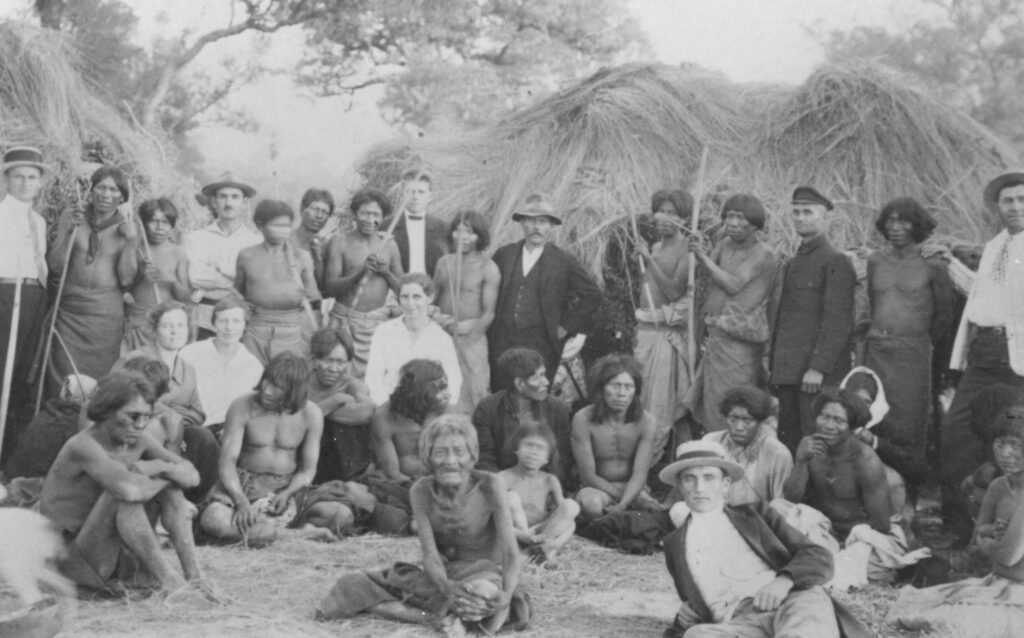
As early as the first few years after the founding of the Fernheim colony, there was a desire to bring the Gospel to the indigenous people of the Enlhet tribe. On July 7, 1932, the KFK (Commission for Ecclesiastical Affairs) of the Fernheim colony decided to launch a missionary effort among the indigenous peoples of the Chaco. However, the Chaco War initially delayed the launch of this project. After the war ended, the vision became a reality: on September 17, 1935, 97 mission workers founded the missionary association “Light to the Indians.” The goal was to serve the indigenous peoples in a holistic manner: through preaching the Gospel, education, health promotion, and support for their social development. An initial attempt to establish a mission station failed due to a shortage of water. Eventually, the work began in Yalve Sanga, a place that remains closely linked to the mission’s history to this day. Abraham Unger was the first missionary to volunteer for this service. Learning the local language played a decisive role in enabling the missionaries to relate to the people as equals. For this reason, in 1937, G. B. Giesbrecht was tasked with learning the “Enlhet” language, thereby laying an important foundation for subsequent missionary work.
The 1930s – The Beginnings of Mission Work
In the early years of the Fernheim settlement, a desire arose to bring the Gospel to the indigenous people of the Lengua (Enlhet) tribe. Thus, on September 17, 1935, the missionary association “Light to the Indians” was founded with 97 missionary workers.
The first Results
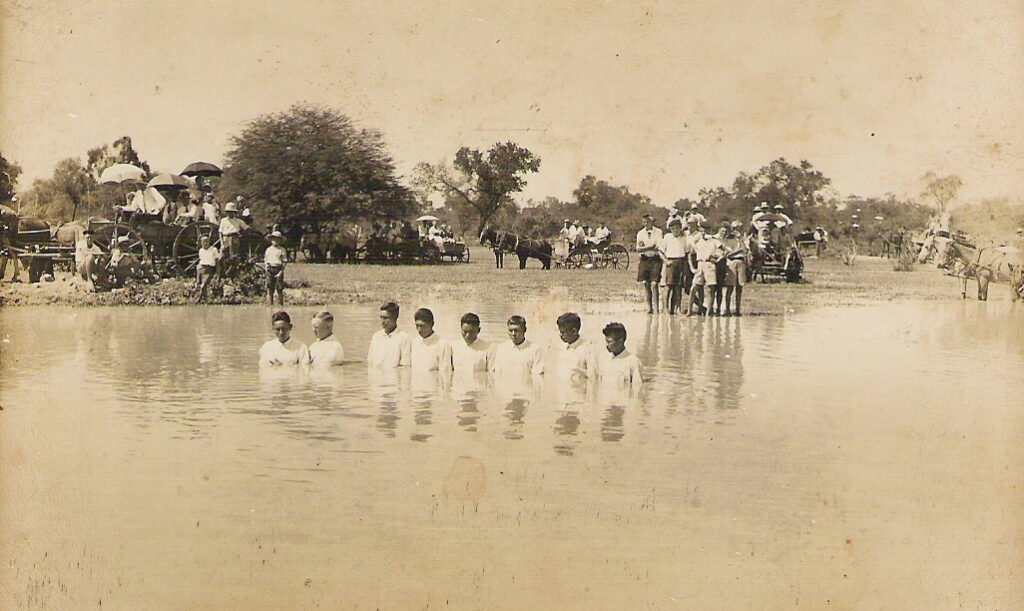
From the very beginning, preaching the Gospel was the central focus of the missionary work. Many Enlhet people welcomed the Christian message with openness and interest. In particular, the Gospel’s message of liberation—which offered hope and freedom in the face of fear of spirits—was warmly received by many people. In 1946, an important milestone was reached when the first seven Enlhet indigenous people were baptized and publicly professed their faith in Jesus Christ. At the same time, the missionary work also went through difficult phases. Due to financial difficulties, “Light to the Indians” was no longer able to manage the missionary work independently. Consequently, responsibility for managing the missionary organization was largely transferred to the American missionary society “American Mennonite Brethren Mission,” which supported the work with financial resources and personnel. Despite these challenges, the work among indigenous peoples was able to continue.
The 1940s – The first Results
In 1946, a significant milestone was reached when the first seven indigenous people from the Lengua tribe were baptized and publicly professed their faith in Jesus Christ.
Growth and new Challenges
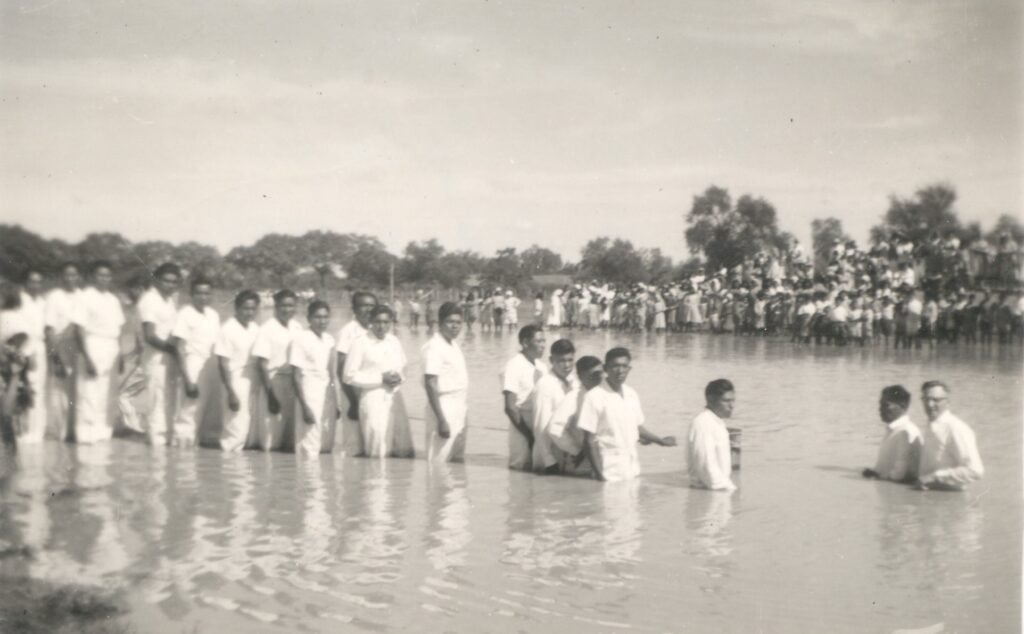
With the arrival of the Chulupi (Nivacle), the missionary work expanded considerably. To meet the new challenges, “Light to the Indians” requested support from Mennonite missionary organizations in North America. As a result, more volunteers were recruited, and the work among indigenous peoples was further strengthened. Jakob Franz took on the pioneering work among the Chulupi, thereby laying the foundation for a growing community. An important milestone was reached in 1958, when the first baptism among the Chulupi was held in Filadelfia. On that occasion, 21 Chulupi indigenous people publicly professed their faith in Jesus Christ. That same year, another bold step was taken in the missionary work: an attempt to establish peaceful contact with the Ayoreo, who until then had lived in isolation and were known for their warlike nature. However, this encounter ended tragically. Missionary Kornelius Isaak was struck by a spear during an attempt to make contact and later died from his wounds. His commitment and sacrifice remain a powerful testimony to his service to the peoples of the Chaco.
The 1950s – Growth and new Challenges
The gospel was preached not only to the Lengua people but also to the Chulupi (Nivacle) people. The Chulupi settled in the Mennonite colonies as a result of the Chaco War. The missionary work reached a milestone in 1958, when 21 Chulupi were baptized.
Bible translation and Education
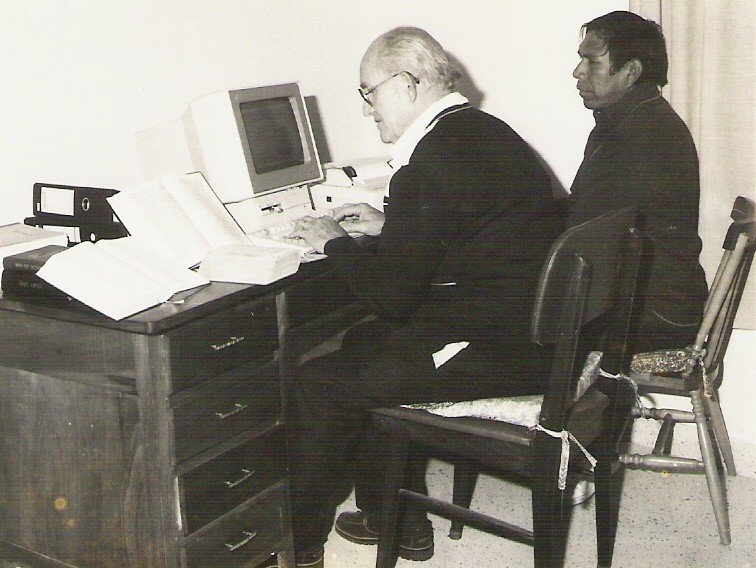
Despite the painful loss of Kornelius Isaak, the missionary work continued with determination. The vision of serving the indigenous peoples of the Chaco with the Gospel remained steadfast and led to the opening of new fields of ministry. Under the leadership of missionary Gerd Enns, work among the Guarani began, opening up new possibilities for bringing the Gospel message to the people. At the same time, the importance of making the Word of God accessible in people’s native languages became clear. Consequently, in 1963, translation projects into the Enlhet and Chulupi languages were launched. This work was carried out in collaboration with an international Bible society and contributed significantly to enabling people to read and understand the Bible in their own language. In addition to evangelism and Bible translation, the training of local church workers also became increasingly important. The goal was to foster the growth of local Christians and prepare them to take on responsibilities in their churches, so that these churches could grow and develop independently.
The 1960s – Bible translation and Education
Missionary work among the Guarani indigenous people also began. In addition, it was decided that the indigenous people should receive the Bible in their own language. This led to the launch, in 1963, of projects to translate the Bible into the Lengua and Chulupi languages. There was also an awareness of the need to train indigenous church workers.
Churches emerge
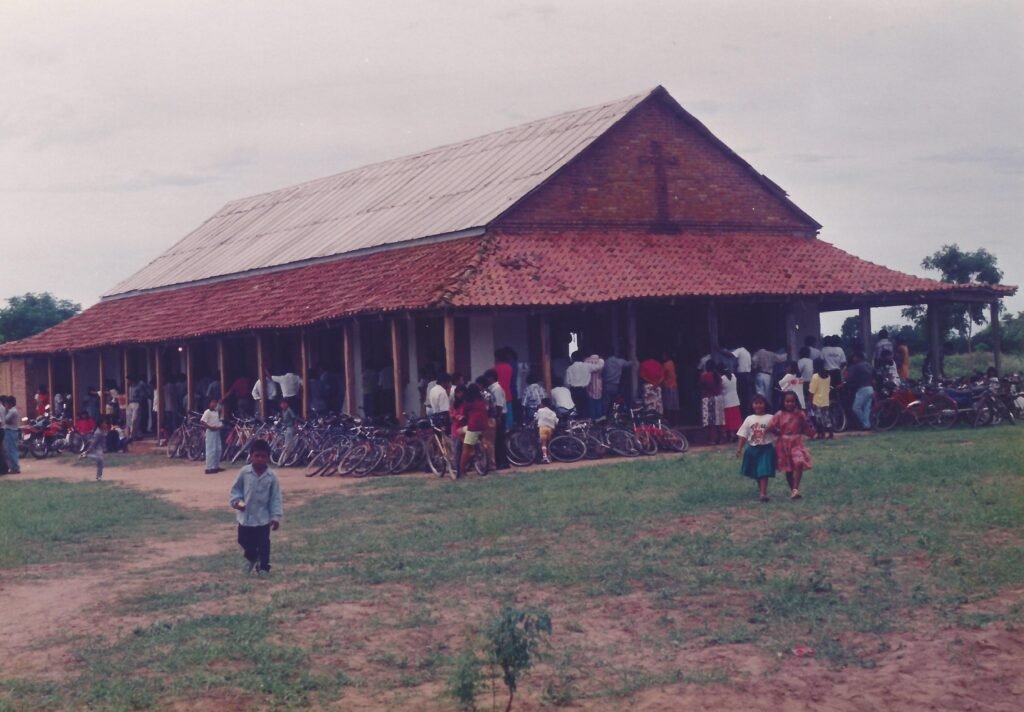
The 1970s were marked by significant progress and major structural changes in missionary work. In 1970, a long-cherished goal was achieved: the New Testament was translated into the “Enlhet” language and made available to the people in their native tongue. Three years later, the translation of the New Testament into the “Chulupi” language was completed. Indigenous churches also continued to develop and organized themselves with increasing autonomy. In 1972, the church union—also known as the Nivacle Church Conference—was established, and in 1978, the Enlhet Conference was founded. These developments strengthened the indigenous churches’ sense of ownership and fostered collaboration among them. Another milestone was the construction of the Indigenous Bible Institute in 1975, made possible by the support of friends in Switzerland. The Bible school began with a three-year training program and became an important center for training and equipping local church workers. In addition, the first baptism among the Guarani took place in 1976. As the work expanded, a clear division of labor became necessary. Consequently, ASCIM (Association for Indigenous-Mennonite Cooperation Services) was founded in 1978. The various areas of work were reorganized: ASCIM assumed responsibility for school education, health care, development projects, and support for indigenous settlements. From then on, “Light to the Indians” focused on evangelism, church planting, Bible translation, and theological training at the Bible Institute for Indigenous Peoples. This reorganization laid the foundation for both the social and spiritual aspects of the work to continue developing in a targeted manner.
The 1970s – Churches emerge
Indigenous churches also continued to develop and became increasingly autonomous. In 1972, the Nivacle Conference of Nivacle communities was established, and in 1978, the Enlhet Conference was founded. Another important milestone was the construction of the Indigenous Bible Institute in 1975.
The transition to Partnership
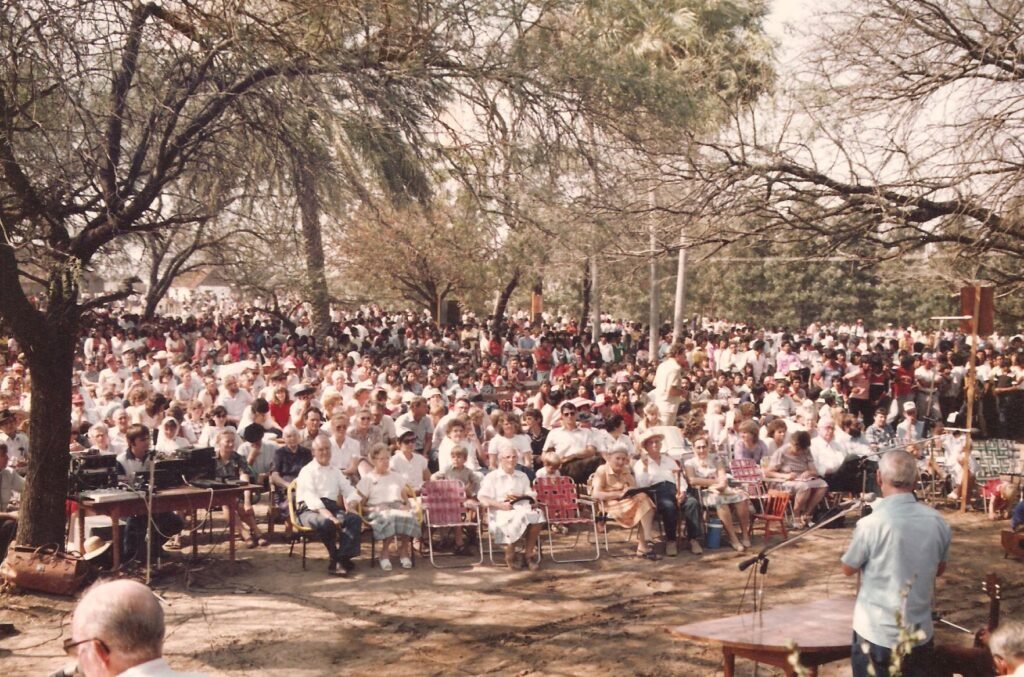
In the 1980s, the positive development of indigenous churches continued. The churches grew both in number and spiritually, and more and more indigenous Christians took on responsibilities in church ministry and leadership. A special milestone was the year 1986, when the mission organization “Light to the Indians” celebrated its 50th anniversary. This anniversary was an occasion to look back with gratitude on the past decades and acknowledge God’s many blessings on the mission work. At the same time, the anniversary celebration marked an important turning point in the history of the mission. The pioneering and church-planting phase was gradually coming to an end, while a new era of collaboration was beginning. Local leaders assumed greater responsibility within the churches and collaborated with missionaries in the further development of community work. Another significant step was taken in 1989 with the start of the translation of the Old Testament into the Enlhet and Chulupi languages. This laid the foundation for making the complete Bible available to the communities in their native languages over the long term.
The 1980s – The transition to Partnership
The churches grew both in number and spiritually, and more and more indigenous Christians took on responsibilities in the church’s work and in leadership. The pioneering and community-building phase was gradually coming to an end, while a new era of collaboration was beginning.
The complete Bible for Indigenous Peoples
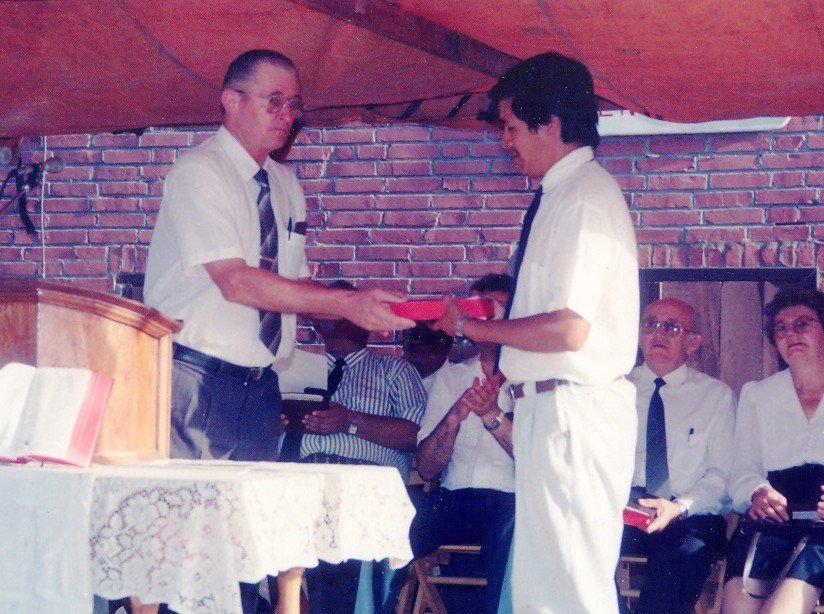
The 1990s were marked by important milestones in Bible translation and by a further strengthening of local leadership. After many years of intensive translation work, on March 11, 1995, the complete Bible in their native language was presented to the churches in Chulupi. Shortly thereafter, on May 11, 1996, the churches in Lengua also received the complete Bible. These events were of great significance, as, for the first time, the Word of God was available in its entirety in their respective languages. At the same time, Indigenous Christians took on increasing responsibilities in the churches, conferences, and training centers. In this way, the transition toward self-governing communities and local leadership continued systematically and left a lasting mark on the mission’s work during that period. In 1998, another step forward was taken when Adolf Ens began his ministry among the Guarani. Thanks to his dedication, the guidance and support provided to the Guarani churches were further expanded, and missionary work in this area was strengthened.
The 1990s – The complete Bible for Indigenous Peoples
After many years of intensive translation work, on March 11, 1995, the complete Bible was presented to the Chulupi churches in their native language. Shortly thereafter, on May 11, 1996, the Lengua churches also received the complete Bible in their native language.
Strengthening local Leaderschip
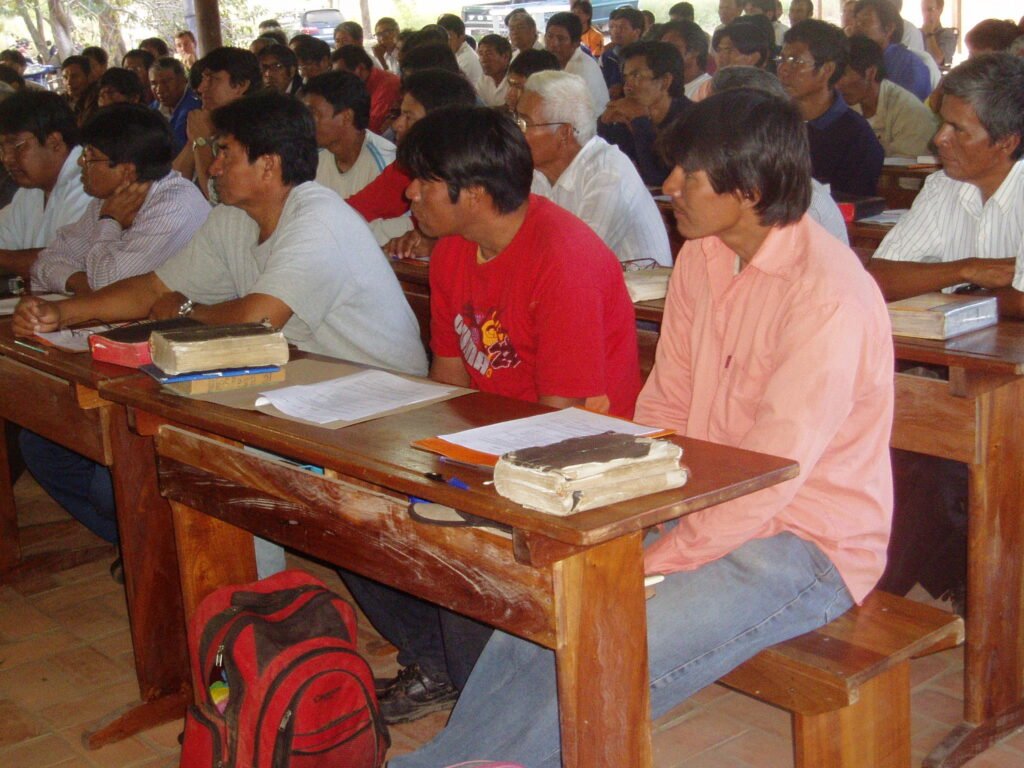
At the beginning of the 21st century, the focus of missionary work shifted increasingly toward supporting, advising, and strengthening local churches. At the same time, new opportunities arose to bring the Gospel to people. Since 2004, the Mennonite community has also been involved in ministry among the Ayoreo people. Armin Neufeld was appointed to this ministry to build relationships and support the churches in their development. In 2006, Siegfried Dürksen took on the role of providing guidance to the Ayoreo communities. That same year, the mission organization “Light to the Indians” was officially registered as a nonprofit organization in Paraguay’s national registry. The organization was named ACOMEM (Asociación Civil Obra Misionera Evangélica Menonita). Accompanying indigenous churches remained an important part of the work. Thus, in 2009, Theodor Hein resumed his advisory work among the Chulupi churches. Although the churches were already led by local leaders, there remained a desire for missionary accompaniment, spiritual support, and collaboration on an equal footing. In this way, the evolution that had already begun in previous decades continued: from traditional missionary work toward collaborative support with autonomous indigenous churches.
The 2000s – Strengthening local Leadership
In the early 21st century, the focus of missionary work shifted increasingly toward supporting, advising, and strengthening indigenous churches. At the same time, new opportunities arose to bring the Gospel to people.
Advances in spiritual Education
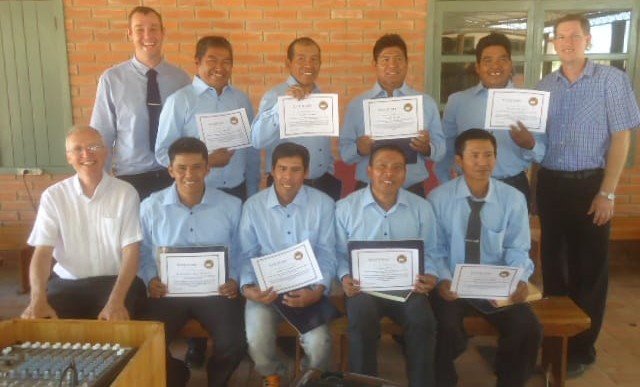
The development of indigenous churches continued into the new millennium as well. In 2007, the Guarani Conference was founded, enabling the Guarani churches to unite under their own church conference. In this way, the major indigenous church associations were consolidated from an organizational standpoint and were able to carry out their work with increasing autonomy. In 2014, another important step was taken at the Bible Institute for Indigenous Peoples. In collaboration with MIM, a school for women was founded to train indigenous women in biblical, spiritual, and practical matters and to prepare them for their responsibilities within the family, the community, and society. This specifically expanded the educational offerings of the Bible Institute. That same year also marked the beginning of radio ministry aimed at indigenous peoples. In collaboration with Radio ZP-30, radio programs were created, translated into various indigenous languages, and broadcast. In this way, the message of the Gospel was able to reach people who had difficulty accessing churches or other Christian ministries. In addition to these new areas of work, Bible translation remained an important task. In 2015, the revision of the Bible in Nivacle (Chulupi) began, followed by the revision of the Bible in Enlhet in 2017. The goal of these projects was to update the translations from a linguistic standpoint and keep them understandable and accessible for future generations. For the revision of the Nivacle Bible, the New Tribes Mission in Paraguay was invited, and it entrusted this task to its missionaries Jamie and Charlene Hunt. Arnold Boschmann was appointed by ACOMEM as a missionary in Enlhet with the mission of coordinating the revision of the Enlhet Bible.
The 2010s – Advances in spiritual Education
Spiritual training has expanded not only through the Bible school but also through the women’s school. Programs are currently being conducted with the wives of the Bible institute’s students. In addition, radio programs aimed at the indigenous population have been produced in collaboration with Radio ZP-30.
Reorientation
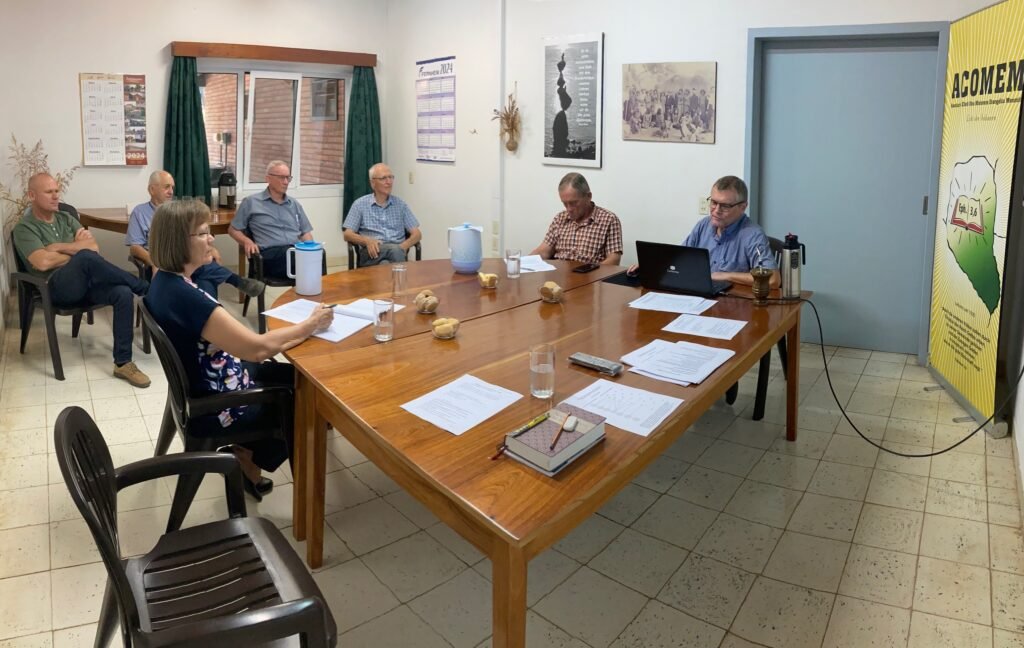
On August 21, 2021, the possibility of reorienting missionary work among indigenous peoples was raised. The mandate to reorient ACOMEM arose from the need to hire, in the coming years, new missionaries with updated job descriptions that would align with the new circumstances of the sending churches. The reorientation was commissioned by the sponsoring churches in April 2025. ACOMEM works on behalf of the seven sponsoring churches of Fernheim and Neuland and is considered their extension in missionary work among the indigenous peoples of the central Chaco. Together, the churches pooled their spiritual, human, and financial resources for the building of the Kingdom of God in the region. A fundamental aspect of the process was the participation of both the sending and receiving communities. Different perspectives were taken into account through working groups composed of church members, staff, committees, representatives of the four linguistic groups, and the leaders of the indigenous women’s associations. The working groups were facilitated by Dr. Hartwig Eitzen, while the women’s group was led by Anganetha Eitzen. The collected input was evaluated, reviewed jointly with representatives of the sponsoring churches and the expanded committee, and subsequently presented to the churches. The working groups produced the results of the reorientation, divided into six areas of focus: (1) The first area of focus concerns ACOMEM’s identity. (2) The second area of focus aims to develop and strengthen mutual recognition between Indigenous peoples and German-speaking people as brothers and sisters in the faith through personal relationships. (3) The third area of focus centers on the number and characteristics of missionaries. There are plans to hire and bring in more missionaries, as the number of indigenous churches has grown considerably over the past 90 years. (4) The fourth pillar concerns leadership and collaboration within indigenous churches. The goal is to visit and provide more intensive guidance to the leaders and workers of indigenous churches. (5) The fifth pillar includes the clear objective of imparting Bible-faithful teaching and communal practice. (6) The sixth pillar aims to raise awareness of the missionary work. This reorientation was approved and confirmed on April 26, 2025. In 2026, the sponsoring churches also confirmed the spiritual work among the Angaite indigenous people.
The 2020s – Reorientation
On August 21, 2021, the possibility of reorienting missionary work among indigenous peoples was raised. The mandate to reorient ACOMEM arose from the need to hire, in the coming years, new missionaries with updated job descriptions that would align with the new circumstances of the mission churches.